Is Little Neck Safe? Queens Livability, Crime & Rent
Little Neck scores 5.7: a low crime rate and few housing violations, but weak transit.
For the borough-wide trend and the spread between police precincts, see Is Queens safe?
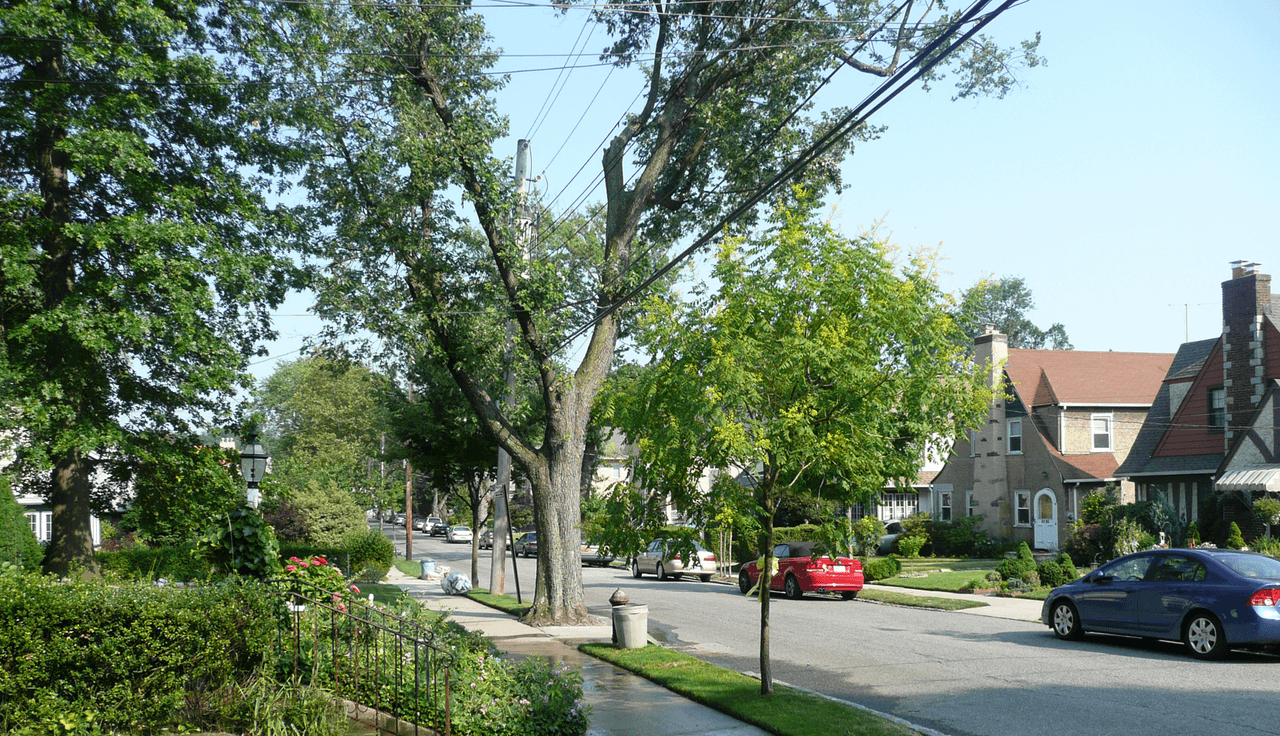
Little Neck at a glance
- Borough
- Queens
- Livability score (excludes crime)
- 5.7/10
- Livability rank (NYC Open Data guides)
- #16 of 27
- Safety verdict
- Exceptionally Safe
- Crimes (12 mo)
- 575
- ZIP codes
- 11362 (71%), 11363 (29%)Share of residential units, NYC PLUTO 26v2
- Subway stations
- 0
- Data updated
- 2026-09-14
Is Little Neck Safe?
By NYPD data, Little Neck is rated "Exceptionally Safe" for crime, with the lowest crime rate per resident of the 27 Queens neighborhoods we track (22.8 reported crimes per 1,000 residents). It recorded 575 crime incidents and 0 shooting incidents in the 12 months ending June 2026. Little Neck crime rate and NYPD breakdown →
Little Neck, Queens scores 5.7/10 for overall livability, ranking #16 of 27 Queens neighborhoods scored from NYC Open Data. Little Neck scores 5.7: a low crime rate and few housing violations, but weak transit.
The livability score draws on HPD housing violations, subway access, NYC Parks' tree inventory and parks, and 311 noise complaints per resident from NYC Open Data, refreshed periodically rather than live. It does not include crime; NYPD complaint and shooting figures are on the Little Neck safety page. Safety varies by block — check a specific Little Neck address below for a block-level breakdown.
Little Neck's NTA (Douglaston-Little Neck) ranks #1 of 59 Queens neighborhoods for reported crime near a typical spot (1 = fewest)
Mean NYPD complaints (every category) within 300 m of 100 random points in each residential 2020 NTA in Queens, 12 months ending June 30, 2026. Each shade holds about a fifth of them. Per area, not per resident, so the order can differ from the per-resident rate.
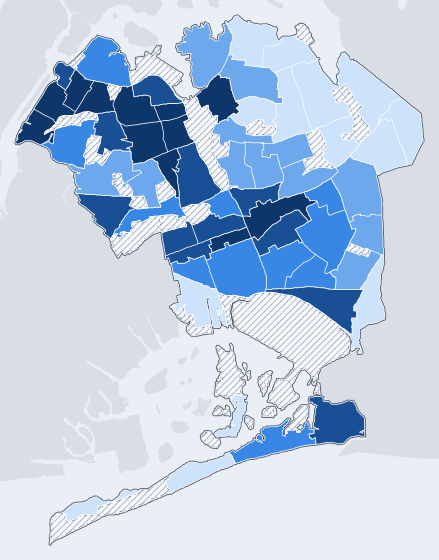
NYPD complaints within 300 m, 12 months to June 30, 2026

Outlined: Douglaston-Little Neck (QN1103), 22.5, #1. Rape and sex-crime complaints, which NYPD publishes at one point per precinct, are left out. All 59 ranked.
Source: NYPD Complaint Data via NYC Open Data (5uac-w243, qgea-i56i), pulled September 14, 2026; boundaries: 2020 Neighborhood Tabulation Areas (NTAs) (9nt8-h7nd).
Score Overview
Vertical line = borough median. Scale: 0-10.
Practical measures HPD housing violations per residential lot over the last 12 months (higher = fewer violations). Borough medians are computed across DwellCheck's Queens neighborhood guides.
Neighborhood Character
Little Neck, Queens, offers a predominantly residential experience marked by its single-family homes and proximity to the Nassau border. You'll find a quiet atmosphere here, reflected in its ART/Livability score of 5.1, which is above the borough median of 4.1. The neighborhood benefits from 13 NYC Parks properties, including the large Douglaston Park Golf Course and Udalls Park Preserve, with Louis Pasteur Park being closest to the neighborhood's center at 94 meters. With an expected 152 trees in a 200m circle, the tree density registers at 4.2/10, meaning it's sparser than most NYC neighborhoods. The building stock largely consists of one-family homes, making up 84% of residential tax lots.
Advertisements
Livability & Restoration
Trees
152 trees
Expected in a 200m circle (NYC Parks tree inventory) | Density: 4.2/10 (city percentile)
In Toronto, 10 more trees on a city block went with a rise in self-rated health comparable to being 7 years younger (Kardan et al., 2015, Scientific Reports). In a cross-sectional study of London boroughs, each additional street tree per km of street went with 1.18 fewer antidepressant prescriptions per 1,000 residents (Taylor et al., 2015, Landscape and Urban Planning).
Park Access
13 parks
NYC Parks properties inside the neighborhood | largest: Douglaston Park Golf Course | nearest to the center: Louis Pasteur Park, 94m | 3 nearest average 312m from the neighborhood's center
Acoustic Quality
7/10
Noise proxy score (higher = quieter)
Environmental noise exposure increases the occurrence of hypertension and cardiovascular disease; WHO's night-noise guidelines call average outdoor night noise above 55 dB increasingly dangerous for public health (Basner et al., 2014, The Lancet).
What is the ART Score?
ART stands for Attention Restoration Theory (Kaplan & Kaplan, 1989) — the framework environmental psychologists use to measure whether a place helps your brain recover from mental fatigue, or pushes it deeper into overload. Cities deplete directed attention (the effortful focus you use at work); exposure to restorative environments replenishes it.
DwellCheck uses the idea in two separate places, and they measure different things. The neighborhood ART score below comes from neighborhood-wide data: up to 5 points from tree density (a city percentile) and up to 5 from how few 311 noise complaints there are per resident. An address report has no ART score. It runs the Wellness checks below, and their points go into the address’s overall score.
Within a point of the Queens median.
What an address report checks instead (Wellness)
- ±Sensory environment. A calm score minus a busy score, each starting at 50. Busy: a firehouse within 100m (+15) or 200m (+8), and 311 noise complaints within 200m over 6 months (15+ adds 5, 40+ adds 12, 80+ adds 20, and 3 more at 20+ complaints that include vehicle or street noise). Calm: a library (+15), community garden (+12) or public plaza or atrium (POPS; +15 indoor, +8 outdoor) within 200m, and a park within 300m (+10; +15 at 1+ acre; +20 at 5+ acres). A difference of +20 or more adds 8 points; −10 to −29 costs 2; −30 or less costs 4. Bars, museums, tourists and foot traffic are not counted.
- +Third places (Oldenburg, 1989). Public libraries, public plazas and atriums (POPS) and community gardens within 400m: 1–2 add 5 points, 3 or more add 10. Cafés and community centers are not counted. In a meta-analysis of longitudinal studies, loneliness or social isolation went with a 29% higher risk of incident coronary heart disease (Valtorta et al., 2016, Heart).
- 0Street vitality (Jacobs, 1961). Permitted block parties, farmers markets and similar community events in the borough over the past 12 months. The event data has no coordinates, so this is a borough-wide count shown for context. It doesn’t change the score.
Health mechanism. The theory holds that natural settings let directed attention recover. The evidence is mixed: a systematic review of 31 studies (Ohly et al., 2016, Journal of Toxicology and Environmental Health, Part B) found that time in natural environments improved 3 of 13 pooled attention measures (Digit Span Forward, Digit Span Backward and Trail Making Test B) and showed no marked benefit on the other 10.
Theoretical foundations. Kaplan & Kaplan (1989), The Experience of Nature; Jacobs (1961), The Death and Life of Great American Cities; Oldenburg (1989), The Great Good Place.
Little Neck's NTA (Douglaston-Little Neck) ranks #1 of 59 Queens neighborhoods for 311 noise complaints (1 = quietest), with a median of 0 rodent complaints near a typical spot
Median 311 complaints within 100 m (noise) and 150 m (rodents) of 100 random points in each residential 2020 NTA in Queens, noise March 13, 2026 to September 13, 2026, rodents March 17, 2026 to September 13, 2026. Noise shades hold about a fifth each; rodent shades break at 1, 2. Complaints filed, not measured sound or a count of rats.
Noise
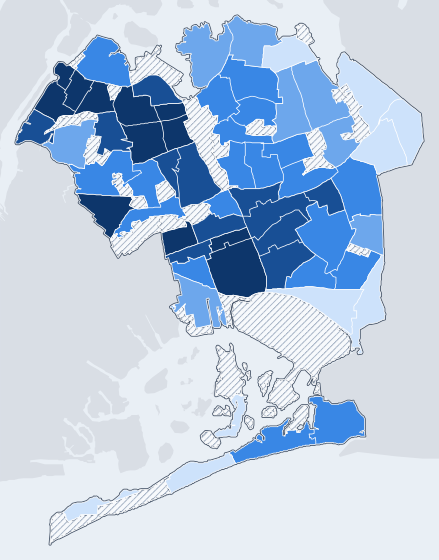
Noise complaints within 100 m (median)

Rodents
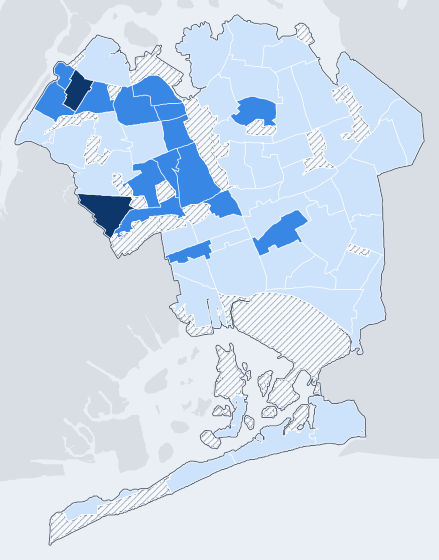
Rodent complaints within 150 m (median)

Outlined: Douglaston-Little Neck, noise 0 (#1), rodents 0. Quietest Queens neighborhoods.
Source: NYC 311 Service Requests via NYC Open Data (erm2-nwe9), pulled September 14, 2026; boundaries: 2020 Neighborhood Tabulation Areas (NTAs).
Transit & Commute
Subway Stations
No transit data available
Commute Score
1/10
Borough median: 3.5/10
Outdoor & Green Space
Avg Tree Count
152
Trees expected in a 200m circle
Tree Density
4.2/10
1,207 trees per km² in NYC Parks' tree inventory (street and park trees); city percentile, 1 = sparsest
Largest Parks In or Near the Neighborhood
- Douglaston Park Golf Course
- Udalls Park Preserve
- Louis Pasteur Park
- Challenge Playground
- Nassau Mall
Nearest to the neighborhood's center: Louis Pasteur Park, about 94m. The 3 nearest NYC Parks properties average 312m from the center (approximate park centers, not entrances).

Practical Living
Practical (HPD violations): 9/10 (Queens median 8). It measures HPD housing violations per residential lot over the last 12 months (higher = fewer violations).
Building Mix (Residential Tax Lots)
Share of the 5,117 residential tax lots in the neighborhood by PLUTO building class (NYC Department of City Planning).
Advertisements
Who Little Neck Is For
Families seeking quiet
With an ART/Livability score of 5.1 (above borough median of 4.1) and Low noise complaints (16.5 per 1,000 residents), you'll find a tranquil environment.
Those prioritizing safety
Little Neck is exceptionally safe, with the lowest crime rate per resident of the 27 Queens neighborhoods DwellCheck tracks, and 0 shootings in 12 months.
Suburban-style living preferences
84% of residential tax lots are one-family homes, offering a distinct single-family dwelling environment.
Pros & Cons
Strengths
Exceptionally safe
Lowest crime rate per resident among tracked Queens neighborhoods; 0 shootings in 12 months.
Quiet environment
ART/Livability score of 5.1 (borough median: 4.1) and Low noise complaints (16.5 per 1,000 residents).
High practical score
Practical score of 9, indicating fewer HPD housing violations per residential lot (borough median: 8).
Abundant park access
13 NYC Parks properties within the neighborhood, including Douglaston Park Golf Course and Udalls Park Preserve.
Trade-offs
Limited transit options
Commute score of 1 (borough median: 3.5), with transit described as 'Limited'.
Lower tree density
Tree density is 4.2/10, which is sparser than most NYC neighborhoods.
Score Any Address in Little Neck
Get detailed livability scores based on building health, transit access, safety, noise levels, and 15+ NYC data sources.
Search an Address in Little NeckFrequently Asked Questions about Little Neck
1Is Little Neck safe?
By NYPD data, Little Neck is rated "Exceptionally Safe" for crime, with the lowest crime rate per resident of the 27 Queens neighborhoods we track (22.8 reported crimes per 1,000 residents). It recorded 575 crime incidents and 0 shooting incidents in the 12 months ending June 2026. See the safety page for the full breakdown.
2What is the average rent in Little Neck?
Rents in Little Neck, Queens vary significantly by building and apartment type. Market pricing isn't aggregated for this neighborhood yet; use DwellCheck to research specific addresses for HPD registration, HPD violations, and other building-level records. DwellCheck doesn't show rent-stabilization status; request the apartment's rent history from DHCR for that.
3How is transit access in Little Neck?
Little Neck has a commute score of 1/10. It counts the subway stations inside the neighborhood and the lines they serve. Station-level mapping for this neighborhood isn't available yet.
4What are the best streets in Little Neck?
The best streets depend on your priorities. Use DwellCheck to compare specific addresses across livability, safety, transit, and environmental factors.
5What is Little Neck known for?
Little Neck sits in Queens and ranks #16 of 27 Queens neighborhoods scored from NYC Open Data on DwellCheck's livability score (5.7/10). It's served by 0 subway stations. Little Neck scores 5.7: a low crime rate and few housing violations, but weak transit.
6What is it like to live in Little Neck?
DwellCheck scores Little Neck, Queens from NYC Open Data on practical (HPD housing violations per residential lot over the last 12 months (higher = fewer violations)), commute (subway stations and lines in the neighborhood), ART (tree density and 311 noise complaints per resident), outdoor (trees and park proximity). Little Neck's composite is 5.7/10. Little Neck scores 5.7: a low crime rate and few housing violations, but weak transit. For the block-by-block view, run any specific Little Neck address through DwellCheck.
7Where is Little Neck?
Little Neck is in Queens, New York City. DwellCheck maps it to the Douglaston-Little Neck Neighborhood Tabulation Area (QN1103), which falls in the Census tabulation area that approximates Queens Community District 11 (Auburndale-Bayside-Douglaston). Its main ZIP codes are 11362 and 11363.
8What ZIP code is Little Neck in?
Little Neck spans ZIP codes 11362 (71% of residential units) and 11363 (29%). Shares are of the 9,929 residential units in the Douglaston-Little Neck Neighborhood Tabulation Area (QN1103), from NYC PLUTO 26v2 tax-lot records. 2 other ZIP codes each hold under 5%.
9Can you walk around Little Neck at night?
Little Neck is classified as "Exceptionally Safe" by NYPD complaint data. Over the past 12 months it recorded 0 shooting incidents and 575 total crime incidents. Walking at night carries the same risk profile as anywhere in NYC: stay on commercial corridors with foot traffic, avoid empty side streets after midnight, and prefer subway lines that run 24/7.
10Is Little Neck dangerous?
By NYPD data, Little Neck is rated "Exceptionally Safe", with the lowest crime rate per resident of the 27 Queens neighborhoods we track. 575 crime incidents over 12 months. Block-level risk varies; check the address-level safety score for any specific street or building.
11What parts of Little Neck should I avoid?
NYPD complaint records carry approximate incident coordinates, but a neighborhood total can't tell you which blocks drive it, so we don't publish an "avoid this street" list. For a specific block, use DwellCheck's address-level safety score, which counts NYPD crime complaints within a 300m radius of the building over the latest 12 months of published data and compares that count with the borough average.
12Is Little Neck a good place to live?
Little Neck scores 5.7/10 for overall livability and has the lowest crime rate per resident of the 27 Queens neighborhoods we track. Little Neck scores 5.7: a low crime rate and few housing violations, but weak transit. Whether it's a good fit depends on what you weight: families, solo renters, and remote workers each prioritize different factors (noise, transit access, parks, building quality).
13What is the average DwellScore in Little Neck?
Little Neck has a Composite DwellScore of 5.7, driven by high scores in Safety, Practicality (9), and Outdoor (6.4), but tempered by a low Commute score (1).
14How safe is Little Neck?
Little Neck is exceptionally safe, with the lowest crime rate per resident of the 27 Queens neighborhoods DwellCheck tracks and no shootings reported in the last 12 months.
15What is the housing like in Little Neck?
The building mix in Little Neck is primarily one-family homes, accounting for 84% of residential tax lots, followed by two-family homes at 12%.
16What kind of park access does Little Neck have?
You'll find 13 NYC Parks properties in Little Neck, with the largest being Douglaston Park Golf Course and Udalls Park Preserve. Louis Pasteur Park is the closest to the neighborhood's center.
Related Guides
NYC Building Complaints Lookup
Check any building's HPD, DOB, and 311 complaint history before signing.
30 NYC Apartment Red Flags
What to watch for at the viewing, in the listing, and on the landlord.
How to Check Your NYC Landlord
A 5-step free lookup: ACRIS ownership, HPD violations, DOB complaints, lawsuits.
Is My Apartment Rent-Stabilized?
Request a free DHCR rent history and verify stabilization status in 24-72 hours.