Is Bayside Safe? Queens Livability, Crime & Rent
Bayside is a suburban-feeling enclave (Composite: 5.7) best for car-owning families prioritizing green space and well-maintained buildings, but limited transit should factor into your decision.
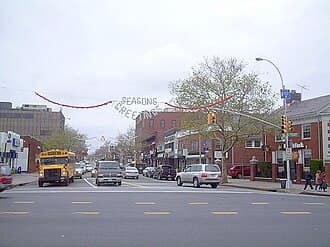
Bayside at a glance
- Borough
- Queens
- Livability score
- 5.7/10
- Borough rank (NYC Open Data guides)
- #15 of 27
- Safety verdict
- Much Safer Than Average
- Crimes (12 mo)
- 1,183
- ZIP codes
- 11361 (62%), 11364 (31%), 11360 (7%)Share of residential units, NYC PLUTO 26v2
- Subway stations
- 0
- Data updated
- 2026-09-14
Is Bayside Safe?
Bayside, Queens scores 5.7/10 for overall livability, ranking #15 of 27 Queens neighborhoods scored from NYC Open Data. Bayside is a suburban-feeling enclave (Composite: 5.7) best for car-owning families prioritizing green space and well-maintained buildings, but limited transit should factor into your decision.
The livability score draws on HPD housing violations, subway access, NYC Parks' tree inventory and parks, and 311 noise complaints per resident from NYC Open Data, refreshed periodically rather than live. It does not include crime; NYPD complaint and shooting figures are on the Bayside safety page. Safety varies by block — check a specific Bayside address below for a block-level breakdown.
Score Overview
Vertical line = borough median. Scale: 0-10.
Practical measures HPD housing violations per residential lot over the last 12 months (higher = fewer violations). Borough medians are computed across DwellCheck's Queens neighborhood guides.
Neighborhood Character
You'll find Bayside feels suburban despite being within Queens, with tree-lined blocks averaging 187 trees per 200 meters and a tree density of 6.6/10 that creates genuine shade corridors. The neighborhood clusters around Bell Boulevard's dining and retail options, with parks such as Crocheron Park, John Golden Park, Raymond O'Connor Park, Marie Curie Playground, and Linnaeus Park — the 3 nearest average 718 meters from the neighborhood's center —giving you genuine outdoor access without the density of central neighborhoods. One-family houses sit on 71% of residential tax lots and two-family houses on 23%, creating a mixed streetscape that feels more established than trendy.

Livability & Restoration
Trees
187 trees
Expected in a 200m circle (NYC Parks tree inventory) | Density: 6.6/10 (city percentile)
In Toronto, 10 more trees on a city block went with a rise in self-rated health comparable to being 7 years younger (Kardan et al., 2015, Scientific Reports). In a cross-sectional study of London boroughs, each additional street tree per km of street went with 1.18 fewer antidepressant prescriptions per 1,000 residents (Taylor et al., 2015, Landscape and Urban Planning).
Park Access
10 parks
NYC Parks properties inside the neighborhood | largest: Crocheron Park | nearest to the center: Captain Dermody Triangle, 664m | 3 nearest average 718m from the neighborhood's center
Acoustic Quality
5/10
Noise proxy score (higher = quieter)
Environmental noise exposure increases the occurrence of hypertension and cardiovascular disease; WHO's night-noise guidelines call average outdoor night noise above 55 dB increasingly dangerous for public health (Basner et al., 2014, The Lancet).
What is the ART Score?
ART stands for Attention Restoration Theory (Kaplan & Kaplan, 1989) — the framework environmental psychologists use to measure whether a place helps your brain recover from mental fatigue, or pushes it deeper into overload. Cities deplete directed attention (the effortful focus you use at work); exposure to restorative environments replenishes it.
DwellCheck uses the idea in two separate places, and they measure different things. The neighborhood ART score below comes from neighborhood-wide data: up to 5 points from tree density (a city percentile) and up to 5 from how few 311 noise complaints there are per resident. An address report has no ART score. It runs the Wellness checks below, and their points go into the address’s overall score.
More than a point above the Queens median: denser trees, fewer noise complaints per resident, or both.
What an address report checks instead (Wellness)
- ±Sensory environment. A calm score minus a busy score, each starting at 50. Busy: a firehouse within 100m (+15) or 200m (+8), and 311 noise complaints within 200m over 6 months (15+ adds 5, 40+ adds 12, 80+ adds 20, and 3 more at 20+ complaints that include vehicle or street noise). Calm: a library (+15), community garden (+12) or public plaza or atrium (POPS; +15 indoor, +8 outdoor) within 200m, and a park within 300m (+10; +15 at 1+ acre; +20 at 5+ acres). A difference of +20 or more adds 8 points; −10 to −29 costs 2; −30 or less costs 4. Bars, museums, tourists and foot traffic are not counted.
- +Third places (Oldenburg, 1989). Public libraries, public plazas and atriums (POPS) and community gardens within 400m: 1–2 add 5 points, 3 or more add 10. Cafés and community centers are not counted. In a meta-analysis of longitudinal studies, loneliness or social isolation went with a 29% higher risk of incident coronary heart disease (Valtorta et al., 2016, Heart).
- 0Street vitality (Jacobs, 1961). Permitted block parties, farmers markets and similar community events in the borough over the past 12 months. The event data has no coordinates, so this is a borough-wide count shown for context. It doesn’t change the score.
Health mechanism. The theory holds that natural settings let directed attention recover. The evidence is mixed: a systematic review of 31 studies (Ohly et al., 2016, Journal of Toxicology and Environmental Health, Part B) found that time in natural environments improved 3 of 13 pooled attention measures (Digit Span Forward, Digit Span Backward and Trail Making Test B) and showed no marked benefit on the other 10.
Theoretical foundations. Kaplan & Kaplan (1989), The Experience of Nature; Jacobs (1961), The Death and Life of Great American Cities; Oldenburg (1989), The Great Good Place.

Transit & Commute
Subway Stations
No transit data available
Commute Score
1/10
Borough median: 3.5/10

Outdoor & Green Space
Avg Tree Count
187
Trees expected in a 200m circle
Tree Density
6.6/10
1,487 trees per km² in NYC Parks' tree inventory (street and park trees); city percentile, 1 = sparsest
Largest Parks In or Near the Neighborhood
- Crocheron Park
- John Golden Park
- Raymond O’Connor Park
- Marie Curie Playground
- Linnaeus Park
Nearest to the neighborhood's center: Captain Dermody Triangle, about 664m. The 3 nearest NYC Parks properties average 718m from the center (approximate park centers, not entrances).

Practical Living
Practical (HPD violations): 9/10 (Queens median 8). It measures HPD housing violations per residential lot over the last 12 months (higher = fewer violations).
Building Mix (Residential Tax Lots)
Share of the 8,201 residential tax lots in the neighborhood by PLUTO building class (NYC Department of City Planning).
Who Bayside Is For
People who want well-maintained buildings
Practical score of 9/10 (well above borough median of 8.0), tied for the highest in Queens, reflects a low rate of HPD housing violations per residential building
Families seeking green space and schools
Above-median tree density (6.6/10), five accessible parks, and highlighted top-rated schools make this neighborhood competitive for families; ART/Livability score of 5.3 outpaces borough median of 4.1
People who don't rely on daily public transit
Commute score of 1/10 reflects limited transit access; this is only viable if you drive, bike, or work locally
Pros & Cons
Strengths
Above-median tree density
Average 187 trees within 200m radius and 6.6/10 tree density
Few housing violations
Practical score of 9/10 (borough median: 8.0) reflects a low rate of HPD housing violations per residential building
Multiple parks within reasonable distance
Parks (Crocheron, John Golden, Raymond O'Connor, Marie Curie, Linnaeus) provide consistent outdoor access; the 3 nearest parks average 718m from the neighborhood's center
Low rodent complaints
Only 46 rodent complaints on record, indicating better pest management than many neighborhoods
Trade-offs
Severely limited public transit
Commute score of 1/10 (borough median: 3.5) means you're dependent on cars or very limited transit options
Score Any Address in Bayside
Get detailed livability scores based on building health, transit access, safety, noise levels, and 15+ NYC data sources.
Search an Address in BaysideFrequently Asked Questions about Bayside
1Is Bayside safe?
By NYPD data, Bayside is rated "Much Safer Than Average", with a lower crime rate per resident than 88% of Queens neighborhoods. 1,183 crime incidents and 0 shooting incidents over the past 12 months. See the safety page for the full breakdown.
2What is the average rent in Bayside?
Rents in Bayside, Queens vary significantly by building and apartment type. Market pricing isn't aggregated for this neighborhood yet; use DwellCheck to research specific addresses for HPD registration, HPD violations, and other building-level records. DwellCheck doesn't show rent-stabilization status; request the apartment's rent history from DHCR for that.
3How is transit access in Bayside?
Bayside has a commute score of 1/10. It counts the subway stations inside the neighborhood and the lines they serve. Station-level mapping for this neighborhood isn't available yet.
4What are the best streets in Bayside?
The best streets depend on your priorities. Use DwellCheck to compare specific addresses across livability, safety, transit, and environmental factors.
5What is Bayside known for?
Bayside sits in Queens and ranks #15 of 27 Queens neighborhoods scored from NYC Open Data on DwellCheck's livability score (5.7/10). It's served by 0 subway stations. Bayside is a suburban-feeling enclave (Composite: 5.7) best for car-owning families prioritizing green space and well-maintained buildings, but limited transit should factor into your decision.
6What is it like to live in Bayside?
DwellCheck scores Bayside, Queens from NYC Open Data on practical (HPD housing violations per residential lot over the last 12 months (higher = fewer violations)), commute (subway stations and lines in the neighborhood), ART (tree density and 311 noise complaints per resident), outdoor (trees and park proximity). Bayside's composite is 5.7/10. Bayside is a suburban-feeling enclave (Composite: 5.7) best for car-owning families prioritizing green space and well-maintained buildings, but limited transit should factor into your decision. For the block-by-block view, run any specific Bayside address through DwellCheck.
7Where is Bayside?
Bayside is in Queens, New York City. DwellCheck maps it to the Bayside Neighborhood Tabulation Area (QN1102), which falls in the Census tabulation area that approximates Queens Community District 11 (Auburndale-Bayside-Douglaston). Its main ZIP codes are 11361, 11364 and 11360.
8What ZIP code is Bayside in?
Bayside spans ZIP codes 11361 (62% of residential units), 11364 (31%) and 11360 (7%). Shares are of the 13,116 residential units in the Bayside Neighborhood Tabulation Area (QN1102), from NYC PLUTO 26v2 tax-lot records.
9Can you walk around Bayside at night?
Bayside is classified as "Much Safer Than Average" by NYPD complaint data. Over the past 12 months it recorded 0 shooting incidents and 1,183 total crime incidents. Walking at night carries the same risk profile as anywhere in NYC: stay on commercial corridors with foot traffic, avoid empty side streets after midnight, and prefer subway lines that run 24/7.
10Is Bayside dangerous?
By NYPD data, Bayside is rated "Much Safer Than Average", with a lower crime rate per resident than 88% of Queens neighborhoods. 1,183 crime incidents over 12 months. Block-level risk varies; check the address-level safety score for any specific street or building.
11What parts of Bayside should I avoid?
NYPD complaint records carry approximate incident coordinates, but a neighborhood total can't tell you which blocks drive it, so we don't publish an "avoid this street" list. For a specific block, use DwellCheck's address-level safety score, which counts NYPD crime complaints within a 300m radius of the building over the latest 12 months of published data and compares that count with the borough average.
12Is Bayside a good place to live?
Bayside scores 5.7/10 for overall livability and has a lower crime rate per resident than 88% of Queens neighborhoods. Bayside is a suburban-feeling enclave (Composite: 5.7) best for car-owning families prioritizing green space and well-maintained buildings, but limited transit should factor into your decision. Whether it's a good fit depends on what you weight: families, solo renters, and remote workers each prioritize different factors (noise, transit access, parks, building quality).
13What is the average DwellScore in Bayside?
The composite score is 5.7. The score is driven up by exceptional Practical (9.0) and ART/Livability (5.3) ratings, but pulled down by a Commute score of 1/10 due to limited transit access.
14How safe is Bayside?
Bayside is rated much safer than average, with a lower crime rate per resident than 88% of Queens neighborhoods; 1,183 crimes were recorded over 12 months, a stable trend (-3.7%). Noise complaints (1,402) are low per resident compared with the other neighborhoods we track.
15What's the transit situation?
Commute score of 1/10 reflects limited public transit. You'll need a car for most errands and commuting unless you work locally or can bike.
16How green is the neighborhood?
Bayside has above-median tree coverage with an average of 187 trees per 200 meters and a tree density of 6.6/10. Parks provide consistent outdoor access; the 3 nearest parks average 718 meters from the neighborhood's center.
Related Guides
NYC Building Complaints Lookup
Check any building's HPD, DOB, and 311 complaint history before signing.
30 NYC Apartment Red Flags
What to watch for at the viewing, in the listing, and on the landlord.
How to Check Your NYC Landlord
A 5-step free lookup: ACRIS ownership, HPD violations, DOB complaints, lawsuits.
Is My Apartment Rent-Stabilized?
Request a free DHCR rent history and verify stabilization status in 24-72 hours.