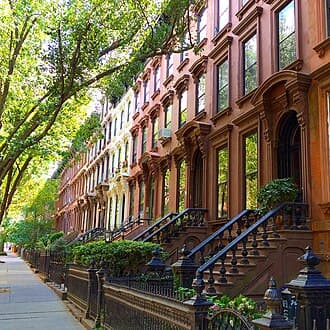

The 15 Quietest Neighborhoods in NYC
Lower is quieter. "Median" is the number of 311 noise complaints within 100 meters of the typical sampled spot; "mean" averages all 100 spots, so a single heavily reported building can pull it above the median. Neighborhoods with the same median are ordered by the mean, then by NTA code, so neighborhoods with the same median and mean are tied whatever their rank number. 18 neighborhoods share the lowest median (0); the 15 shown are the ones among them with the lowest means.
| Rank | Neighborhood | Borough | Median / 100m | Mean |
|---|---|---|---|---|
| #1 | Todt Hill-Emerson Hill-Lighthouse Hill-Manor Heights | Staten Island | 0 | 0.8 |
| #2 | Staten Island | 0 | 0.8 | |
| #3 | Staten Island | 0 | 0.8 | |
| #4 | Queens | 0 | 1 | |
| #5 | Staten Island | 0 | 1.2 | |
| #6 | Arden Heights-Rossville | Staten Island | 0 | 1.2 |
| #7 | Bay Terrace-Clearview | Queens | 0 | 1.9 |
| #8 | Glen Oaks-Floral Park-New Hyde Park | Queens | 0 | 2 |
| #9 | Springfield Gardens (South)-Brookville | Queens | 0 | 2 |
| #10 | Staten Island | 0 | 2.3 | |
| #11 | Staten Island | 0 | 2.7 | |
| #12 | Staten Island | 0 | 3.3 | |
| #13 | Brooklyn | 0 | 4 | |
| #14 | Staten Island | 0 | 4 | |
| #15 | Rosedale | Queens | 0 | 5.9 |
Data source: NYC Open Data 311 Service Requests (erm2-nwe9), pulled September 14, 2026; 100 random points per neighborhood.
The Data
Every noise complaint filed in NYC flows through 311 and lands in a public dataset. For every residential NYC Neighborhood Tabulation Area (NTA) we placed 100 random points inside its boundary and counted the 311 noise complaints filed within 100 meters of each point — roughly a one-block radius, the same count the DwellCheck address report shows. The ranking uses the median point: the typical spot in the neighborhood.
This page shows the bottom of that ranking: the fifteen NYC neighborhoods with the fewest noise complaints around the typical spot, March 13, 2026 to September 13, 2026.
ℹ️A caveat about "quiet"
311 data reflects reported complaints, not decibel measurements. Neighborhoods where residents call 311 less often may show fewer complaints even when real noise is similar. Treat the ranking as a signal — then check the specific block and building.
Quietest Neighborhoods by Borough
The three quietest in each borough on the same 311 measure (median complaints within 100 meters; ties by the mean). Each borough page ranks every residential neighborhood in it.
Quietest neighborhoods in Manhattan
- Stuyvesant Town-Peter Cooper Village (median 4, mean 27.9)
- Morningside Heights (median 9.5, mean 16.7)
- Upper East Side-Carnegie Hill (median 10.5, mean 21.7)
Quietest neighborhoods in Brooklyn
- Spring Creek-Starrett City (median 0, mean 4)
- Coney Island-Sea Gate (median 2, mean 14.1)
- Sheepshead Bay-Manhattan Beach-Gerritsen Beach (median 2.5, mean 8.1)
Quietest neighborhoods in Queens
- Douglaston-Little Neck (median 0, mean 1)
- Bay Terrace-Clearview (median 0, mean 1.9)
- Glen Oaks-Floral Park-New Hyde Park (median 0, mean 2)
Quietest neighborhoods in Bronx
- Riverdale-Spuyten Duyvil (median 0, mean 6.8)
- Hunts Point (median 0, mean 9.5)
- Co-op City (median 0.5, mean 2.5)
Quietest neighborhoods in Staten Island
- Todt Hill-Emerson Hill-Lighthouse Hill-Manor Heights (median 0, mean 0.8)
- Annadale-Huguenot-Prince's Bay-Woodrow (median 0, mean 0.8)
- Tottenville-Charleston (median 0, mean 0.8)
Quiet and safe are different measures. For crime, see the safest neighborhoods in NYC, ranked by NYPD crime complaints.
Check Noise Data for Any Address
Neighborhood rankings are a starting point. Enter any NYC address to see the 311 noise complaints within 100m and how that count ranks against the rest of the neighborhood.
Check Any Address — FreeMethodology
- Source: 311 Service Requests from 2010 to Present (NYC Open Data dataset
erm2-nwe9), pulled September 14, 2026. - Time window: Complaints created March 13, 2026 through September 13, 2026, the six months ending at the latest complaint date published when the data was pulled.
- Complaint types: "Noise - Residential", "Noise - Commercial", "Noise - Street/Sidewalk", "Noise - Vehicle", "Noise - Park", "Noise". Helicopter, house-of-worship and collection-truck noise are not counted.
- Geographic unit: The 197 residential 2020 NYC Neighborhood Tabulation Areas (NTAs); parks, airports, cemeteries and other non-residential NTAs are not ranked.
- Sampling: 100 random points inside each NTA boundary (seeded, so a rerun on the same data reproduces them). For each point, NYC Open Data counts the complaints within 100 meters (straight-line distance). A point near a neighborhood or borough edge counts complaints across it.
- Ranking: The median of the 100 point counts, lowest first; ties are broken by the mean.
Finding a Quiet Apartment in a Loud Neighborhood
If your first-choice neighborhood didn't make this list, you can still find a quiet apartment there. The variables that matter at the individual building level:
- Distance from the main avenue. Mid-block apartments are usually quieter than corner or avenue-facing units.
- Rear-facing units. Back-of-building apartments face a courtyard or rear facade, away from street traffic.
- Away from ground-floor commercial tenants. Restaurants, bars, and delivery-heavy retail create noise in the units directly above.
- Visit at night. A daytime viewing won't reveal a bar, a late delivery route or a weekend party block.
Check the specific address on DwellCheck to see the 311 noise complaint count around any NYC building — blocks inside the same neighborhood can differ a lot.
Frequently Asked Questions
1Which NYC neighborhood is the quietest?
By 311 noise complaints, the quietest NYC neighborhood is tied between Todt Hill-Emerson Hill-Lighthouse Hill-Manor Heights (Staten Island), Annadale-Huguenot-Prince's Bay-Woodrow (Staten Island) and Tottenville-Charleston (Staten Island). At the typical (median) spot of 100 random points we sampled in each, 0 noise complaints were filed within 100 meters between March 13, 2026 and September 13, 2026, against a citywide median of 8; the mean across all 100 points was 0.8.
2What is the quietest borough in NYC?
Staten Island. Averaged over every sampled point in the borough, Staten Island had 4.5, Queens had 12.9, Brooklyn had 25.9, Manhattan had 54.3, Bronx had 56.3 311 noise complaints within 100 meters, March 13, 2026 to September 13, 2026.
3What are the quietest neighborhoods in Manhattan?
On the same 311 measure, the quietest Manhattan neighborhoods are 1. Stuyvesant Town-Peter Cooper Village (median 4, mean 27.9), 2. Morningside Heights (median 9.5, mean 16.7), 3. Upper East Side-Carnegie Hill (median 10.5, mean 21.7). Citywide, Stuyvesant Town-Peter Cooper Village ranks #68 of 197 (quietest = #1). The full Manhattan list is on our quietest neighborhoods in Manhattan page.
4What makes a NYC neighborhood quiet?
This ranking measures complaints, not causes, so it cannot say why a neighborhood is quiet. Common-sense factors include fewer bars and late-night businesses, lower density, and distance from highways and elevated train lines. Check the specific block: complaint counts can differ sharply within one neighborhood.
5Can I find a quiet apartment in a loud neighborhood?
Often, yes — noise varies block by block. Mid-block and rear-facing apartments away from avenues and ground-floor bars or restaurants are usually quieter than corner or avenue-facing units. Always check the specific address.
6Does quiet mean safe?
Not directly. Noise complaints and crime are different measures, and a neighborhood can rank well on one and poorly on the other. Cross-reference with our Safest NYC Neighborhoods guide for a combined view.
7How do I check noise levels for a specific NYC address?
Enter the address on DwellCheck — we count the 311 noise complaints of all six counted types within 100 meters of any NYC address over the past 6 months, and show where that count ranks among 100 spots sampled across the same neighborhood, plus the neighborhood and borough averages. The report gives the count and its context, not a per-type or per-hour breakdown; for individual complaints, their descriptors and their timestamps, query the 311 Service Requests dataset (erm2-nwe9) on NYC Open Data. See the NYC noise complaint lookup guide for the full walkthrough.
8Are these rankings seasonal?
Somewhat. The counts cover March 13, 2026 through September 13, 2026. Across September 2025 to August 2026, January 2026 (43,921) and February 2026 (40,736) had the fewest 311 noise complaints citywide, and October 2025 (81,026) the most. This window includes neither of the two quietest months, so a six-month count that included them would likely be lower.
9What about noise from neighbors inside my building?
311 captures indoor residential noise complaints too, but the 100-meter count doesn't distinguish indoor from outdoor. For building-specific issues, look up the address's own complaint history via our Look Up Building Complaints guide — repeated residential noise complaints at one building are a red flag.
10Where do famously quiet areas like Forest Hills and Riverdale rank?
Of the 197 residential neighborhoods ranked (quietest = #1), Forest Hills, which includes Forest Hills Gardens, is #83 (median 5.5 noise complaints within 100 meters) and Riverdale-Spuyten Duyvil is #17 (median 0). Neighborhood boundaries are broad, so a quiet enclave shares its number with busier streets around it, and a single heavily reported building near a sample point raises the count.
The Bottom Line
Quiet exists in NYC. The 15 neighborhoods above had the fewest 311 noise complaints around the typical spot in the latest six months of data — and even within the loudest neighborhoods, the right block and building can be quiet. Check the specific address before you sign anything.
Check Noise Data for Any NYC Address
See the 311 noise complaint count within 100m of any NYC building, ranked against the neighborhood and the borough.
Check Any Address — FreeNo account needed. Results in under 30 seconds.
Related Guides
15 Noisiest NYC Neighborhoods
The inverse — where NYC files the most noise complaints
NYC Noise Complaint Lookup
Look up the 311 noise complaints filed near one specific address
15 Safest NYC Neighborhoods
Ranked by 12 months of NYPD crime complaints per 300m
15 Rattiest NYC Neighborhoods
Where 311 rodent complaints pile up
NYC Safety Score by Address
Block-level data for any specific address