

The 15 Safest Neighborhoods in NYC
Lower is better. All values are average crime reports per 300-meter walking radius, averaged over 100 random points inside the NTA, for the 12 months of NYPD data ending 2026-06-30.
| Rank | Neighborhood | Borough | Crimes / 300m |
|---|---|---|---|
| #1 | Staten Island | 13.8 | |
| #2 | Todt Hill-Emerson Hill-Lighthouse Hill-Manor Heights | Staten Island | 17.2 |
| #3 | Queens | 22.5 | |
| #4 | Staten Island | 24.3 | |
| #5 | Arden Heights-Rossville | Staten Island | 24.4 |
| #6 | Staten Island | 25.6 | |
| #7 | Staten Island | 29 | |
| #8 | Staten Island | 30.4 | |
| #9 | Breezy Point-Belle Harbor-Rockaway Park-Broad Channel | Queens | 32 |
| #10 | Bay Terrace-Clearview | Queens | 35.1 |
| #11 | Glen Oaks-Floral Park-New Hyde Park | Queens | 38.4 |
| #12 | Oakland Gardens-Hollis Hills | Queens | 43.5 |
| #13 | Staten Island | 47.1 | |
| #14 | Queens | 47.8 | |
| #15 | Queens | 48.3 |
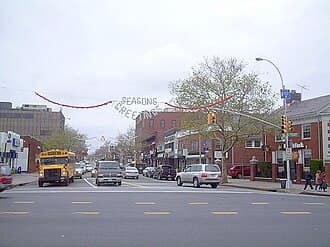
Data source: NYPD Complaint Data (current and historic) via NYC Open Data, through 2026-06-30; pulled 2026-09-14.
The Data
Every NYC neighborhood has a crime rate on record. The NYPD's Complaint Data feeds (current year and historic), published quarterly on NYC Open Data, log reported crimes with a location and date. We aggregate that by NYC Neighborhood Tabulation Area (NTA) and normalize to average crimes per 300-meter walking radius — roughly a 3-4 minute walk, the distance that actually affects daily living.
ℹ️A note on what the numbers mean
These are reported incidents — a combined score that doesn't separate violent crime from property crime from quality-of-life calls. A low score is strongly correlated with all of them, but a neighborhood can be "safe" in one category and not another. For a breakdown by crime type, check any specific address on DwellCheck.
Borough-Level Comparison
If you're deciding on a borough before zooming into neighborhoods, here's how the five boroughs rank on the same crime-per-300m metric:
| Rank | Borough | Crimes / 300m | Shootings / 500m |
|---|---|---|---|
| #1 | Staten Island | 75.6 | 0.2 |
| #2 | Queens | 159.5 | 0.3 |
| #3 | Brooklyn | 321.2 | 1.2 |
| #4 | Bronx | 515.9 | 2.7 |
| #5 | Manhattan | 696.5 | 1.3 |
Safest Neighborhoods by Borough
The top three in each borough on the same crime-per-300m measure. Each borough page ranks every residential neighborhood in it.
Safest neighborhoods in Brooklyn
- Windsor Terrace-South Slope (76.1)
- Mapleton-Midwood (West) (95)
- Marine Park-Mill Basin-Bergen Beach (105.2)
Safest neighborhoods in Queens
- Douglaston-Little Neck (22.5)
- Breezy Point-Belle Harbor-Rockaway Park-Broad Channel (32)
- Bay Terrace-Clearview (35.1)
Safest neighborhoods in Bronx
- Riverdale-Spuyten Duyvil (59.9)
- Pelham Bay-Country Club-City Island (112.9)
- Throgs Neck-Schuylerville (123.2)
Safest neighborhoods in Staten Island
- Annadale-Huguenot-Prince's Bay-Woodrow (13.8)
- Todt Hill-Emerson Hill-Lighthouse Hill-Manor Heights (17.2)
- Tottenville-Charleston (24.3)
Crime is one measure of a neighborhood. For noise, see the quietest NYC neighborhoods, ranked by 311 noise complaints.
Check a Specific Address
Neighborhood averages are a starting point. Enter any NYC address to see block-level crime, shooting, and arrest data and a walking-radius score.
Check Any Address — FreeMethodology
Every data point on this page is reproducible from public sources. Here's exactly how we calculated it:
- Source: NYPD Complaint Data Current (Year To Date) and NYPD Complaint Data Historic (NYC Open Data datasets
5uac-w243andqgea-i56i), pulled 2026-09-14. - Time window: The 12 months ending 2026-06-30, the latest complaint date NYPD had published.
- Geographic unit: Residential 2020 NYC Neighborhood Tabulation Areas (NTAs) — the neighborhood boundaries used by the city for planning.
- Normalization: For 100 random points inside each NTA boundary, count crime reports within 300 meters (straight-line distance). Average across the points.
- Crime types: All NYPD complaint categories, weighted equally. Felonies, misdemeanors, and violations are combined for the headline metric.
The result is an area-corrected crime score: how much crime was reported within a short walk of a typical point in the neighborhood — not raw incident counts, which would penalize larger neighborhoods.
Caveats You Should Know
Three things to keep in mind before you take any ranking as final:
- Reported ≠ actual. The NYPD data captures reported incidents. Over-policed neighborhoods can look worse than they are; under-reported areas can look safer.
- Averages hide blocks. A neighborhood can have a low average with dangerous corridors. Always check the specific address.
- This is a snapshot. Safety trends move over years. A ranking from 2020 would have placed several neighborhoods very differently. Use these numbers as current, not permanent.
Frequently Asked Questions
1How do you rank the safest NYC neighborhoods?
We rank by average NYPD crime complaints per 300-meter walking radius across each NYC Neighborhood Tabulation Area (NTA). Lower is better. The 300m radius approximates a 3-4 minute walk — the distance that actually affects daily living — and covers every NYPD complaint category (felonies, misdemeanors, and violations). The NYPD data was pulled from NYC Open Data on 2026-09-14.
2What is the safest borough in NYC?
Based on NYPD crime data per 300m walking radius: 1. Staten Island (75.6 incidents), 2. Queens (159.5 incidents), 3. Brooklyn (321.2 incidents), 4. Bronx (515.9 incidents), 5. Manhattan (696.5 incidents). Individual neighborhoods within each borough can vary significantly.
3What is the safest neighborhood in New York City?
Annadale-Huguenot-Prince's Bay-Woodrow in Staten Island, with 13.8 NYPD crime complaints within 300 meters of a typical point over the 12 months ending 2026-06-30, against a citywide average of 350.4. Todt Hill-Emerson Hill-Lighthouse Hill-Manor Heights (Staten Island, 17.2) and Douglaston-Little Neck (Queens, 22.5) are second and third.
4What are the safest neighborhoods in Brooklyn?
By the same NYPD measure, the safest neighborhoods in Brooklyn are 1. Windsor Terrace-South Slope (76.1 crimes per 300m), 2. Mapleton-Midwood (West) (95 crimes per 300m), 3. Marine Park-Mill Basin-Bergen Beach (105.2 crimes per 300m). The full Brooklyn list is on our safest neighborhoods in Brooklyn page.
5What are the safest neighborhoods in Manhattan?
By the same NYPD measure, the safest neighborhoods in Manhattan are 1. Upper East Side-Lenox Hill-Roosevelt Island (290.1 crimes per 300m), 2. Morningside Heights (310 crimes per 300m), 3. Stuyvesant Town-Peter Cooper Village (335.4 crimes per 300m). The full Manhattan list is on our safest neighborhoods in Manhattan page.
6Does a low crime rate guarantee safety?
No. Crime rates are averages across a neighborhood — safety can vary block by block. A neighborhood with a low average can still have dangerous stretches, especially near certain transit hubs or commercial corridors. Always check crime data for the specific address you're considering, not just the neighborhood name. DwellCheck counts crime complaints within 300m and shootings within 500m of any NYC address.
7Why do some well-known "safe" neighborhoods not appear on this list?
Some neighborhoods people perceive as safe rank lower in the data than expected because the 300m circles around points near a neighborhood's edge take in adjacent commercial strips, transit hubs, or areas with higher crime, which get averaged in. This list shows the raw data; use it as one input alongside your own research and an actual address-level check.
8What data sources power these rankings?
NYPD Complaint Data Current (Year To Date) and NYPD Complaint Data Historic (NYC Open Data datasets 5uac-w243 and qgea-i56i), limited to the 12 months ending 2026-06-30, the latest date NYPD had published when the data was pulled. For each residential NTA, crimes are counted within 300 meters of 100 random points inside the neighborhood boundary and averaged. See the methodology below.
9How often is this list updated?
NYPD publishes complaint data on NYC Open Data quarterly. This list uses complaints through 2026-06-30, pulled on 2026-09-14; it changes only when the data is pulled again. Small month-to-month fluctuations shouldn't change the rankings much, but major shifts (new policing initiatives, gentrification waves) can move neighborhoods up or down over years.
10How do I check safety for a specific address?
Enter the address on DwellCheck — we count NYPD crime complaints within 300 meters and shooting incidents within 500 meters over the latest 12 months NYPD has published, plus year-to-date arrests within 300 meters, and compare the crime count with the borough average. You'll see a block-level score (0-100) and a breakdown of which crime types were reported.
11Is this a fair ranking given gentrification and policing bias?
The rankings reflect reported incidents, not lived experience. Over-policed neighborhoods may appear worse than they are; under-reported incidents in wealthier areas can mask real issues. We publish the raw methodology so readers can form their own conclusions. Use these rankings as a starting point, not a final verdict.
The Bottom Line
NYC's safest neighborhoods are the ones where the numbers hold up under scrutiny. The 15 above come from NYPD data, not marketing copy. Use them as a starting point — then check the specific block and building before you sign anything.
Check Safety for Any NYC Address
Get block-level NYPD crime, shooting, and arrest data and a walking-radius breakdown for any NYC address — free.
Check Any Address — FreeNo account needed. Results in under 30 seconds.
Related Guides
15 Quietest NYC Neighborhoods
Ranked by the fewest 311 noise complaints within 100m
NYC Borough Comparison
All 5 boroughs compared on rent, transit, safety, and schools
How to Find an Apartment in NYC
10-step playbook for the NYC rental market
How to Check Your Landlord
Research any NYC landlord's track record
NYC Safety Score by Address
Check crime data for any specific address