NYC Borough Comparison:
Manhattan vs Brooklyn vs Queens vs Bronx vs Staten Island
A guide to choosing the right NYC borough for your lifestyle. Compare median rent, NYPD crime, subway stations and population across all five boroughs, with the source for every figure.

Median monthly rent, all occupied rentals, 2023 (NYC Housing and Vacancy Survey): Manhattan $2,148, Queens $1,740, Brooklyn $1,650, Staten Island $1,600, Bronx $1,280.
Photo by Nicholas Ceglia on UnsplashUnderstanding NYC's Five Boroughs
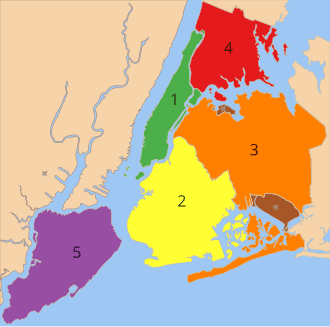
New York City comprises five distinct boroughs, each functioning as a separate county with unique character, demographics, and livability factors. The consolidation of 1898 brought together Manhattan, Brooklyn, Queens, the Bronx, and Staten Island into the modern metropolis we know today. Together, they held 8,804,190 residents at the 2020 Census, making NYC the most populous city in the United States.
Choosing the right borough is perhaps the most consequential decision in your NYC apartment search. This guide provides quantitative analysis across multiple dimensions, historical context for each borough's development, and specific neighborhood recommendations based on lifestyle preferences. The figures come from the city's 2023 Housing and Vacancy Survey (rents), the 2020 Census (population), NYPD complaint data and 311 service requests on NYC Open Data, and the MTA's subway station list.
Borough-by-Borough Comparison
Key metrics across all five boroughs. Sources are listed under the table.
| Metric | Manhattan | Brooklyn | Queens | Bronx | Staten Island |
|---|---|---|---|---|---|
| Median rent, occupied rentals (2023) | $2,148/mo | $1,650/mo | $1,740/mo | $1,280/mo | $1,600/mo |
| NYPD crimes within 300m, 12 mo (average) | 696.5 | 321.2 | 159.5 | 515.9 | 75.6 |
| Subway station complexes | 121 | 156 | 79 | 68 | 21 |
| Population (2020 Census) | 1,694,251 | 2,736,074 | 2,405,464 | 1,472,654 | 495,747 |
| Vibe/Character | Fast-paced, ambitious, cosmopolitan | Creative, diverse, trendy | Diverse, suburban-urban, authentic | Gritty, authentic, emerging | Suburban, quiet, traditional |
Fast-paced, ambitious, cosmopolitan
Median rent, occupied rentals (2023)
$2,148/mo
NYPD crimes within 300m, 12 mo (average)
696.5
Subway station complexes
121
Population (2020 Census)
1,694,251
Creative, diverse, trendy
Median rent, occupied rentals (2023)
$1,650/mo
NYPD crimes within 300m, 12 mo (average)
321.2
Subway station complexes
156
Population (2020 Census)
2,736,074
Diverse, suburban-urban, authentic
Median rent, occupied rentals (2023)
$1,740/mo
NYPD crimes within 300m, 12 mo (average)
159.5
Subway station complexes
79
Population (2020 Census)
2,405,464
Gritty, authentic, emerging
Median rent, occupied rentals (2023)
$1,280/mo
NYPD crimes within 300m, 12 mo (average)
515.9
Subway station complexes
68
Population (2020 Census)
1,472,654
Suburban, quiet, traditional
Median rent, occupied rentals (2023)
$1,600/mo
NYPD crimes within 300m, 12 mo (average)
75.6
Subway station complexes
21
Population (2020 Census)
495,747
- Median rent: Median monthly rent of all occupied rental units in 2023, including rent-stabilized, rent-controlled and public housing. NYC Housing and Vacancy Survey 2023, Selected Initial Findings, Table 6 (NYC HPD, February 2024).
- NYPD crimes within 300m: average count of NYPD crime complaints within 300m of 100 sample points in each of the borough's residential neighborhoods, 12 months to June 30, 2026 (NYPD Complaint Data, NYC Open Data).
- Subway station complexes: MTA Subway Stations and Complexes (data.ny.gov 5f5g-n3cz), station complexes by borough, pulled September 14, 2026. Staten Island's are Staten Island Railway stations.
- Population: 2020 Census (NYC Department of City Planning, 2010–2020 core geographies table).
Manhattan
Population: 1,694,251 (2020 Census)
Explore Manhattan neighborhoodsBorough-wide average from NYPD data
Source: NYPD Complaint Data · June 30, 2026
Mean over 100 sampled points in each of Manhattan's residential neighborhoods, past 6 months
Source: NYC 311 Service Requests · September 13, 2026
Historical Context
Originally inhabited by the Lenape people as "Mannahatta" (island of many hills), Manhattan was purchased by Dutch colonists in 1626. It has served as the commercial and cultural capital of the United States since the 19th century, housing Wall Street, Broadway, and countless headquarters of Fortune 500 companies.
Best For
Pros
- 121 subway station complexes in the smallest borough by land area
- World-class dining, culture, and entertainment
- Walking distance to everything
- Highest job density in NYC
- Prestigious address for business
Cons
- Highest cost of living in NYC
- Extremely competitive rental market
- Smaller living spaces for the price
- Noise and congestion challenges
- Limited parking and outdoor space
Brooklyn
Population: 2,736,074 (2020 Census)
Explore Brooklyn neighborhoodsBorough-wide average from NYPD data
Source: NYPD Complaint Data · June 30, 2026
Mean over 100 sampled points in each of Brooklyn's residential neighborhoods, past 6 months
Source: NYC 311 Service Requests · September 13, 2026
Historical Context
Named after the Dutch town of Breukelen, Brooklyn was an independent city until 1898. It experienced massive growth during the 19th century immigration waves, developing distinct ethnic enclaves. The Brooklyn Bridge (1883) connected it to Manhattan, and today it would be the fourth largest city in America if independent.
Best For
Pros
- Vibrant arts and food scene
- More space for the money vs Manhattan
- Strong neighborhood identities
- Excellent parks (Prospect Park)
- Growing tech sector and job market
Cons
- Rapidly increasing rents (gentrification)
- Variable transit depending on location
- Some areas far from Manhattan
- Competitive school admissions
- Growing congestion in popular areas
Queens
Population: 2,405,464 (2020 Census)
Explore Queens neighborhoodsBorough-wide average from NYPD data
Source: NYPD Complaint Data · June 30, 2026
Mean over 100 sampled points in each of Queens's residential neighborhoods, past 6 months
Source: NYC 311 Service Requests · September 13, 2026
Historical Context
Queens is named after Catherine of Braganza, queen consort of King Charles II. It contains two major airports (JFK and LaGuardia) and hosted two World's Fairs (1939, 1964). The Guinness Book of World Records recognizes Queens as the most ethnically diverse urban area on Earth, with over 160 languages spoken.
Best For
Pros
- Most ethnically diverse urban area in the world
- Authentic international cuisine
- Strong public schools in many areas
- Airport proximity (JFK/LGA)
Cons
- Longer commute times to Manhattan
- Some areas have limited subway access
- Less nightlife than Manhattan/Brooklyn
- Sprawling geography can feel suburban
- Variable neighborhood quality
Bronx
Population: 1,472,654 (2020 Census)
Explore Bronx neighborhoodsBorough-wide average from NYPD data
Source: NYPD Complaint Data · June 30, 2026
Mean over 100 sampled points in each of Bronx's residential neighborhoods, past 6 months
Source: NYC 311 Service Requests · September 13, 2026
Historical Context
The Bronx is the only NYC borough on the US mainland, named after Jonas Bronck, a Swedish settler. It's the birthplace of hip-hop (1973, 1520 Sedgwick Avenue), home to Yankee Stadium, and contains the Bronx Zoo (the largest metropolitan zoo in the US). The "Bronx is Burning" era of the 1970s gave way to significant revitalization.
Best For
Pros
- Most affordable rents in NYC
- Largest park in NYC (Pelham Bay)
- Bronx Zoo and Botanical Garden
- Strong community identity
- Rapid development and investment
Cons
- Higher crime rates in some areas
- Limited subway coverage in northern areas
- Fewer dining/entertainment options
- Stigma (often undeserved) affects perception
- Longer commutes from some neighborhoods
Staten Island
Population: 495,747 (2020 Census)
Explore Staten Island neighborhoodsBorough-wide average from NYPD data
Source: NYPD Complaint Data · June 30, 2026
Mean over 100 sampled points in each of Staten Island's residential neighborhoods, past 6 months
Source: NYC 311 Service Requests · September 13, 2026
Historical Context
Originally called "Staaten Eylandt" by the Dutch, Staten Island was connected to Brooklyn by the Verrazzano-Narrows Bridge in 1964. It remained largely rural until the mid-20th century and retains a distinctly suburban character. The Staten Island Ferry has been free since 1997.
Best For
Pros
- Fewest NYPD crime complaints per 300m of any borough
- Most affordable for homeownership
- Largest living spaces in NYC
- Strong sense of community
- Free ferry with Manhattan skyline views
Cons
- Worst public transit access in NYC
- Longest commutes to Manhattan
- Fewer job opportunities locally
- Car essentially required
- Limited cultural amenities
Which Borough Is Right For You?
Quick recommendations based on common priorities and lifestyle preferences.
Young Professional
Prioritizing career, nightlife, and networking opportunities.
Best: Manhattan (Midtown, FiDi) or Brooklyn (Williamsburg)
Budget: Astoria, Queens or Bushwick, Brooklyn
Growing Family
Prioritizing schools, safety, space, and parks.
Best: Park Slope, Brooklyn or Forest Hills, Queens
Budget: Riverdale, Bronx or Staten Island
Artist/Creative
Prioritizing affordable space, community, and inspiration.
Best: Bushwick, Brooklyn or Ridgewood, Queens
Emerging: Mott Haven, Bronx
Foodie/Culture Seeker
Prioritizing authentic cuisine and cultural experiences.
Best: Flushing or Jackson Heights, Queens
Also: Sunset Park, Brooklyn (Chinatown)
Retiree/Empty Nester
Prioritizing quiet, safety, space, and value.
Best: Staten Island or Riverdale, Bronx
Urban: Brooklyn Heights or UWS Manhattan
Remote Worker
Prioritizing space, quality of life, and value over commute.
Best: Any borough based on preference
Value: Queens or Bronx for most space per dollar
DwellCheck Neighborhood Safety Rankings
Ranked by lowest crime density from real NYPD data across 197 residential NYC neighborhoods.
Source: NYPD Complaint Data · 12 months to June 30, 2026
Frequently Asked Questions
Common questions about choosing the right NYC borough.
1Which NYC borough has the cheapest rent?
By the city's 2023 Housing and Vacancy Survey, the Bronx has the lowest median monthly rent at $1,280, followed by Staten Island ($1,600), Brooklyn ($1,650), Queens ($1,740) and Manhattan ($2,148). Those medians cover every occupied rental, including rent-stabilized and public housing; market-rate rentals alone had a citywide median of $2,000. Staten Island usually requires a car, which adds costs.
2What is the safest borough in New York City?
By NYPD crime complaints, Staten Island has the fewest: an average of 75.6 crimes within 300m of a point over 12 months, followed by Queens (159.5), Brooklyn (321.2), the Bronx (515.9) and Manhattan (696.5). The average is over 100 sample points in each of the borough's residential neighborhoods, 12 months to June 30, 2026. It counts crimes around a point, not per resident, so denser areas count higher. Safety varies a lot by neighborhood within each borough; DwellCheck provides address-level safety scores based on NYPD data.
3Which NYC borough is best for families with children?
For families, Staten Island offers the most space and the fewest crimes per 300m, but limited transit. Park Slope in Brooklyn, the Upper West Side in Manhattan, Forest Hills in Queens, and Riverdale in the Bronx are all popular family neighborhoods.
4How do I decide between Manhattan and Brooklyn?
Choose Manhattan if you prioritize: maximum transit access, walking to work, world-class nightlife/culture, and budget is not a constraint. Choose Brooklyn if you want: more space for the money, creative/artistic community, excellent parks (Prospect Park), strong neighborhood identity, and willingness to trade some commute time for quality of life.
5Which borough has the best public transportation?
DwellCheck doesn't publish a borough transit score. In the MTA's list of subway station complexes, Brooklyn has the most (156), then Manhattan (121), Queens (79) and the Bronx (68); Manhattan fits its 121 into the smallest land area of the five. Staten Island has no subway: its 21 stations are the Staten Island Railway, and the free Staten Island Ferry runs from St. George to Manhattan. For a specific address, DwellCheck measures the walk to the nearest stations.
6Is Queens a good place to live in NYC?
Queens is excellent for those seeking diversity and space. It's the world's most ethnically diverse urban area with unparalleled international cuisine. Areas like Astoria and Long Island City offer good transit access, while Forest Hills and Bayside provide suburban-style living. It's particularly good for families and food enthusiasts.
7Why is the Bronx so cheap compared to other boroughs?
The Bronx's lower rents reflect its history of disinvestment during the 1970s-80s, perception challenges, higher crime rates in some areas, and more limited transit coverage. However, areas like Riverdale, Pelham Bay, and Mott Haven are experiencing significant investment and appreciation. The Bronx offers genuine value for those willing to research specific neighborhoods.
8Can you live in NYC without a car?
You can live car-free in Manhattan, most of Brooklyn, and transit-adjacent areas of Queens (Astoria, LIC, Jackson Heights) and the Bronx (along subway lines). Staten Island effectively requires a car. A DwellCheck address report measures the walk to the nearest subway stations and Citi Bike docks, which shows whether car-free living is practical at that address.
Ready to Find Your NYC Address?
Get instant livability scores for any NYC address. Compare specific buildings and neighborhoods with data-driven insights from 15+ public sources.
Check Any Address — FreeNo account needed. Results in under 30 seconds.
Related Guides
Moving to NYC: Complete Guide
Everything you need to know about relocating to New York City, from budgeting to finding your first apartment.
Is My Apartment Rent-Stabilized?
Verify stabilization status with a free DHCR rent-history request, and understand your tenant rights.
NYC Building Complaints Lookup
Learn how to check HPD, DOB, and 311 records before signing a lease on any NYC apartment.
How to Find an NYC Apartment
A 10-step playbook for navigating the competitive NYC rental market and securing your ideal apartment.